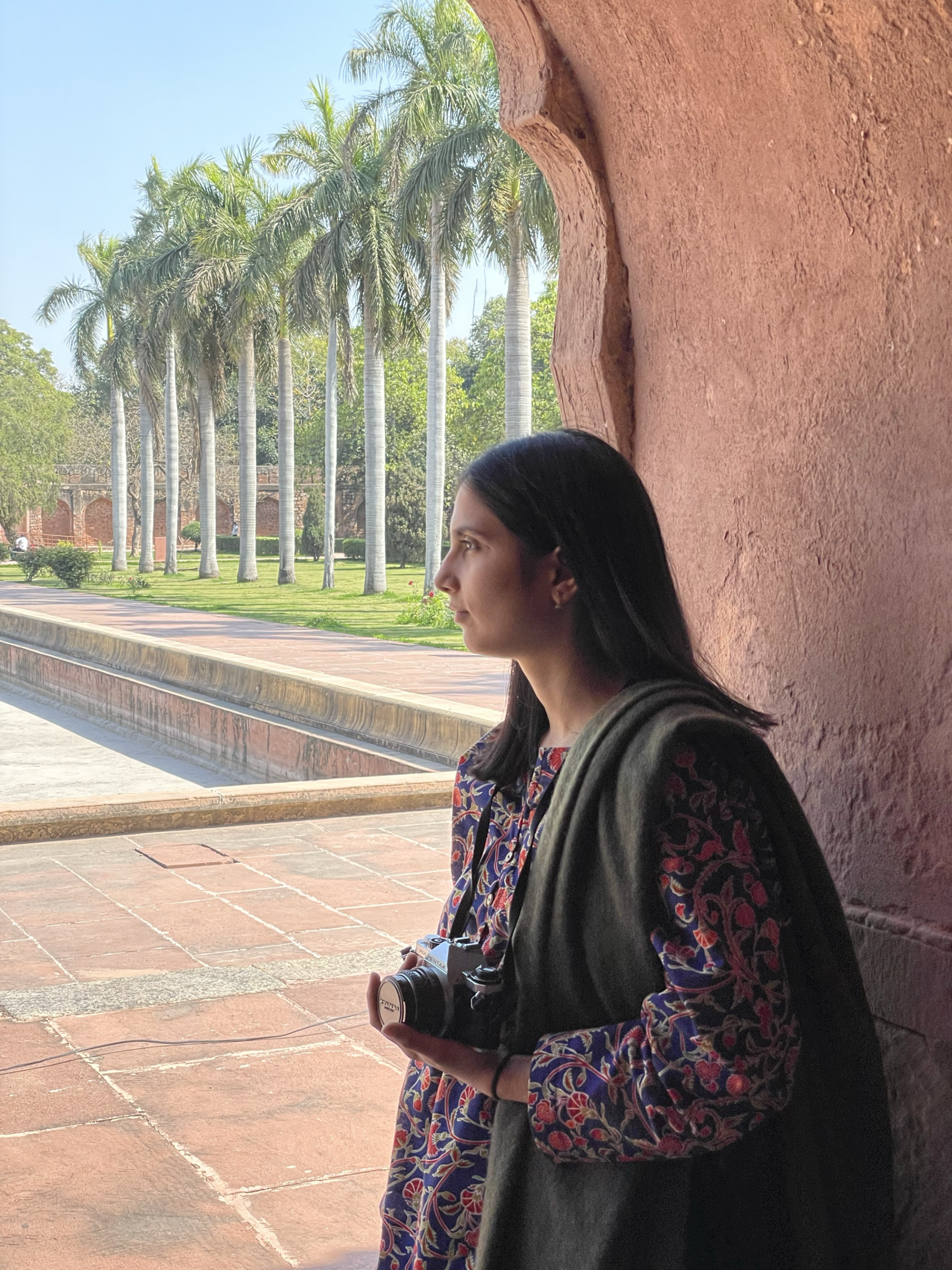
Aqsa Ashraf
PHD SCHOLAR | SCOTTISH GRADUATE SCHOOL FOR ARTS AND HUMANITIES | 2025 – 2029
Aqsa Ashraf is a PhD Art History student at the University of St Andrews, funded by the AHRC through SGSAH. Her research examines how colonial photography contributed to the construction of communalism in India, and Scotland’s role in these problematics. The project aims to critically reassess late-nineteenth century photographic sources, highlighting how communalist legacies affect colonised subjects and postcolonial South Asian diaspora in Scotland. Broadening curatorial approaches to colonial photographic archives, the project will include an exhibition on ‘Scottish colonial photography, Communalism and the South Asian Diaspora’ at the Wardlaw Museum, University of St Andrews. Aqsa’s research interests stem from her lived experience growing up Muslim in an increasingly Islamophobic, post-colonial India and as a member of the South Asian diaspora in Scotland.
Following an Undergraduate and a Postgraduate degree in History at the University of Delhi and Ambedkar University Delhi, Aqsa studied an MLitt in Art History at the University of St Andrews, funded by the Global Merit Award. Her MLitt dissertation focused on the architectural photography of colonial Lucknow, including the display and digitization of photographs of colonial violence by Western Museums in contemporary times. She worked as the Collections Trainee at the Museums of the University of St Andrews from 2023-24, expanding her knowledge of photographic collections, object interpretation, exhibition and research.
Aqsa is keen to build on this knowledge, and to learn from the wider network of doctoral students and the peer-network of the Stuart Hall Foundation. She hopes to engage in critical dialogue about the inequalities that colonialism causes not only among the coloniser and the colonised, but also among post-colonial populations. Through her research and curatorial work, Aqsa is committed to challenging the internalisation of colonial knowledge and bringing progressive change in how colonial photographs are seen, read and handled in the contemporary artworld.
Share this